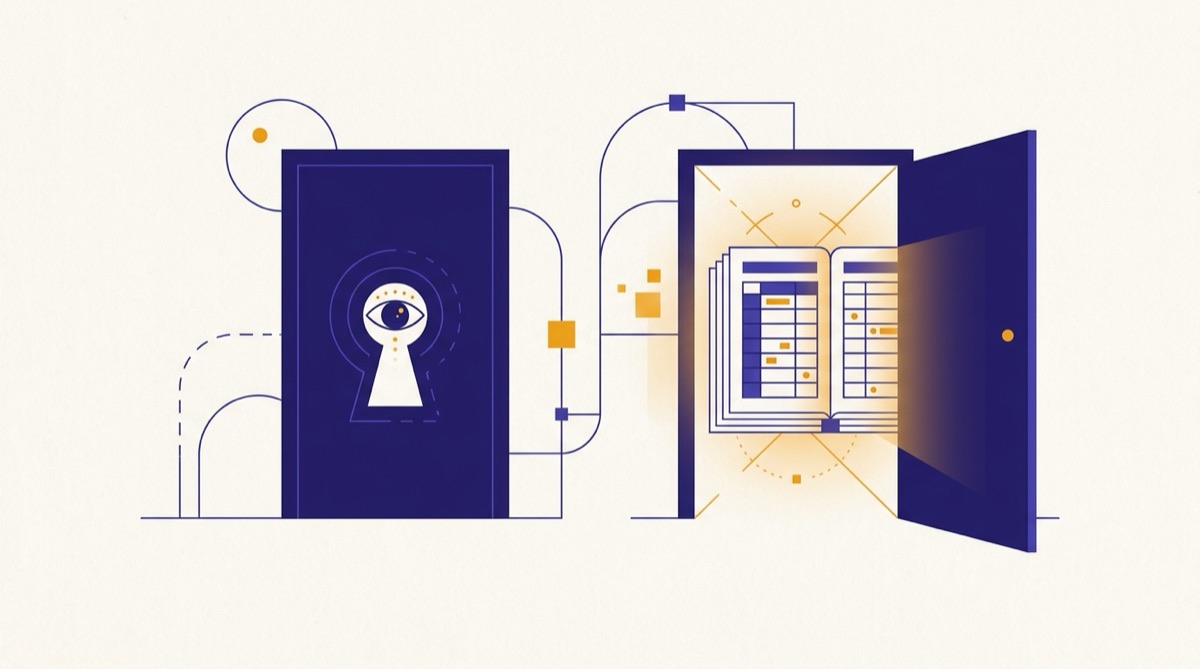
Monitoring watches people; measurement reads work. The line is architectural and checkable: no screenshots or screen recording, no stealth mode, collection scoped to company work only, employees able to see and delete their own data, and every managerial read logged. A tool missing any of these is monitoring, whatever its marketing says.
Why the distinction matters now
The monitoring industry earned its reputation. Screenshot capture sold as a productivity add-on, covert modes shipped alongside privacy branding, keystroke logs marketed as insight. Engineers know these products exist, and any tool that reads work data inherits their shadow. The only way through is to make the difference verifiable rather than rhetorical.
Five properties you can check
1. No screen capture, structurally
Not a disabled feature. Absent. If the code to take a screenshot was never written, the promise cannot be quietly broken by a settings change. The same goes for desktop activity: window titles, app usage and accessibility-tree reading are how monitoring tools reconstruct a person's day, and a measurement tool should simply not contain them.
2. No stealth mode
Every major monitoring product ships a covert deployment option. Its existence tells you who the product serves. A measurement tool should be a visible application the employee installed knowingly and can see running.
3. Scope enforced at the source
Company repositories only, enforced on the device before anything uploads and verified again on the server. Personal projects never leave the laptop, not because a policy says so but because the pipeline cannot carry them.
4. Symmetry
The person being measured sees everything held about them, gets real value from the same data, and can delete items after the fact, with the deletion honoured everywhere including the statistics. Measurement you would not accept being on the other end of is monitoring.
5. Logged reads
Every managerial query lands in an audit log that cannot be switched off. Access without a record is surveillance with better manners.
The test
Ask a vendor which of these five their product satisfies, and ask to verify it in the product rather than the brochure. The conversation gets clarifying very quickly. Teams deserve tools that measure whether the work is being done without ever watching the person doing it, and the technology to build them that way exists today.
Frequently asked questions
Is measuring coding sessions not just monitoring by another name?
The data differs in kind. Sessions record work products on company projects, the same category as code review. Monitoring captures the person: their screen, keystrokes and full desktop day. The five properties above keep a tool on the work side of that line.
What should employees get out of a measurement tool?
Direct value from their own data: their trends, their strongest shipped work, and visibility of what leadership has declared as priorities, so the weighting of their work is knowable up front.
Are these properties legally required?
Requirements vary by jurisdiction; several US states require monitoring notice and UK law expects proportionality assessments. The five properties exceed the common legal floor, which is precisely what makes them a trust position rather than a compliance one.